2nd trip to the Chinese American Bible Church in Monmouth raised an old question: Should a Catholic convert be rebaptized?Reformed answer is no, or else it's a sin. Of course, the pastor of this church appears to side with the re-baptizer, but it's not quite clear how much he enforces it as we kept getting interrupted by greeters. But it's good for me to look further into this. I already know of the Bible church denomination on the surface. Though they joined the SBC (Southern Baptist Convention). They maybe as loose as the Stony Brook SBC church I was with before, where female pastor wasn't a big deal, though this church I have a feeling that they would not permit female pastors. Of course, lots of this is debunked from the fact that infant baptism is valid. However, there's also a question of why Roman Catholic's baptism is valid and Mormon's baptism is not, according to the trinitarian formula of the Nicene tradition.
My plan is for us to attend both churches, the Grace PCA (for doctrinal reason) and this Chinese church (I've always taken Chinese church very seriously, if they are at least Gospel-centered). I guess we're falling out from the Westfield OPC church since after talking to a few folks that there seems to be a lack of caring or more importantly, a zeal to deal with doctrinal discussion. I would still visit, because I can see they are trying to be Gospel centered, which is a good start.
Keep yourself always in Jesus Christ, not to be spit out. Live healthily, nutritiously, spiritually.
Chinese Version:
v.14 Amen, true honestly.
My note: It's likely that Pilate's wife was the only one converted, rather than Pilate. Thus, we have this testimony of his wife's dream of Jesus. Or at least his wife first.
John 18:38 What is truth? Pilate focused on this rather than the answer to his question "yes I am a king..."
After Socrates, philosophy broke into 4 categories = Minor Socratic Schools (Megara, Elean-Eretrian, Early Cynic, Cyrenaic), more and more confusing as many debate what truth is since Socrates. Not into astronomy, cosmos, but more into the meaning of life. Results in 3 schools: Stoic (kindness), Epicureans (happiness), Skepticism ("agnosticism" called by the Spencer & another of Darwin's friend).
Skepticism, like today's Q&A people, when they ask, they don't really seek the answer, like Pilate asked "what is truth". They wish to prove they are better than the lecturer, etc.
v. 15 "Would that you were either hot or cold!" Look and Laodicea and reflect if we are like so? Harmatia, sin by overdoing or underdoing the target.
Tong criticized those who don't use brain and work zealously, need to repent. Those who are quick to satisfy, very hard to repent.
Baptism ceremony by Stephen Tong in both Mandarin and Indonesian sessions. Explained the 2 sacraments. 1 baptism only, not more than 1 for Jesus was baptized once, he didn't die more than once. @1:26:45 Tong explained how those sinned when they baptized again because they weren't submerged the first time, because by doing so you denounced Christ's name (God's name) the first time. God's name is more important than ritual! Nothing wrong with sprinkling, it's not unbiblical, and as we understand it as
Baptism ceremony by Stephen Tong in both Mandarin and Indonesian sessions. Explained the 2 sacraments. 1 baptism only, not more than 1 for Jesus was baptized once, he didn't die more than once. @1:26:45 Tong explained how those sinned when they baptized again because they weren't submerged the first time, because by doing so you denounced Christ's name (God's name) the first time. God's name is more important than ritual! Nothing wrong with sprinkling, it's not unbiblical, and as we understand it as the predicament the descend of the Holy Spirit upon your body, and it is more meaningful than submersion because the Holy Spirit is not at the bottom for you to enter into 😀
Rebaptism refute the already established Holy Name of God, this is very dangerous! This is why we only do 1 time baptism.
Then what about Holy Communion? Why not just one time? Jesus said you must do this in remembrance of me. Acts 2 proved it when every Lord's day they did so.
So it appeared that someone sim swapped my MetroPCS sim card at around 2AM on 5/14/2021, used my number for 2-factor-verification to log into my crypto accounts and wiped out about $15k worth of assets. I believe I've made from about $2k to $10k in a month, mainly dealing with XRP and dogecoins. The thief probably felt very proud of himself/herself. And yes I was angry at first, even now, there's temptation for me to seek them out, study their family, and do something to them, like chop off their fingers, etc. something memorable for them. But then, I thought about how these thieves would need to pay back 4 times worth of what they stole, it's never good for them, no matter how they feel like they are getting away from it. And I don't think if they were caught and did times on Earth would satisfy God's judgment unless they obeyed God's punishment. Even when Zacchaeus was converted, his mentality was so fixed upon paying back 4 times what he cheated from others. This lesson does show that phone companies can't be trusted with this, though it doesn't mean that we shouldn't track down the thieves. The temptation for me is, once tracked down, should I give it to the authorities, or take the matter into my own hands (if you want something done right...).
If I were to share something (i.e. articles, books, videos) long to others, I should be able to summarize the points to them. With my experience introducing Paul Washer to Michael Liu, the timing of sharing the pointers is very important as well. This is why I never look at those shared by others, if they are unable to summarize them. I would just treat them as spams, regardless of where they come from. Am I ignorant? Not if I am using my time wisely and only attend to those "supposed meaningful" spams if I come across them myself somehow. Credit goes to me or whoever that were able to summarize at the right time, while the rest were just mere advertisers, like the commercial videos you see in TV, they have no say in when I benefited from those, in spite of how they try to label those "important".
Learned from a trusted source, Dr. R. C., that Redeemer indeed was overpaying her pastoral staffs. John Lin was paid $175k+ without housing tax, 15 years ago. And he was already known to not want this job. Looking for MBA/Law jobs that he couldn't get, he felt he was trapped in this pastoral role with such high pay. The way I see Lin, he's not one to be into anything Christian. Then what was he doing? I don't know. We always try to run when it was his turn to preach. Tim Keller was the only one anybody cared, until he stepped down. Keller, began his NYC ministry with 6 bedroom 2 unit apartment paid for and a $150k+ salary, with the additional of his 3 boys' private school paid for at $75k/yr. I believe Keller was doing pastoral works before Redeemer, and perhaps attempted it until his wife began smashing china plates. So that was it. They all love to talk about using their pastoral roles to promote themselves either with books and ultimately, to become pastor trainers (higher than pastor) and thus, need no pastoral responsibility themselves. They've "graduated" from it. This sickness is the result of people like Scott Sauls and Revoice. This is not jealousy, because I've already called out their shame before knowing all these figures. But of course, the materialists would come, never forget about them materialists, they would say, if these pastors don't deserve such pay, then why God allowed it? I best just avoid answering them, or else I might be tempted to get a grenade launcher.
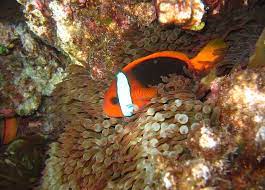
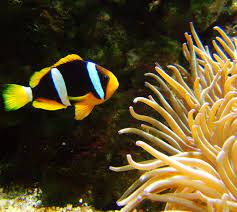
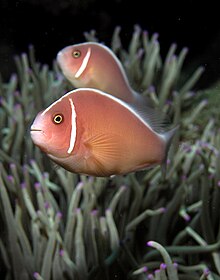
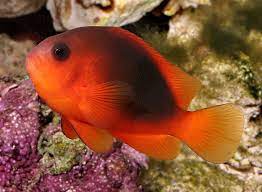
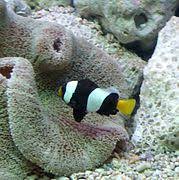
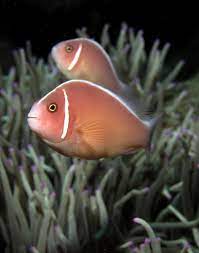
So, after many years, I am back to the aquarium business. The last time I had an aquarium, was in Flushing, before I got married. Fresh water small tank. And before that was the first attempt at Marine Salt water aquarium (likely 20 gal tank) back in St. James, the Stony Brook time, had my clown fish and anemonies thriving well, but had to give them all away to the next door tenant when I was moving to Central Islip doing Chinese Takeout.
Now, after Nadia bought the package deal of aquarium from Craigslist, around Feb 23rd, for I think around $100, 55 Gal. tank (48" x 21" x 13") with lighting and cover and stand! and a wet-dry filtration equipment system, water pump (RIO 2100, 29W), heater, bio balls, and other minor stuff. Good deal.
Took me a while to get up and clean the tank, and then took even longer time for me to figure out how this sump filtration system works. Very ingenious indeed. I had the tank filled with NJ tap water, cycled it with the filter for a few days now, awaiting for the test kits, salt and substrate sands to arrive.
Aquarium first water test, using Tetra's EasyStrips (6-in-1 Aquarium Test Strips): Nitrate = 10 ppm, though it's low and safe, I don't know why it's not white = 0? But ok. Nitrite = 0 ppm, very safe, good. Hardness = 75 ppm, soft, no clue what to do with this info. Chlorine = 0 ppm, great! Alkalinity = 0 ppm, according to the chart, for salt water, not desired, ideal=180-300 ppm. pH = 6.8 - 7, according to the test chart, for salt water, it's too low, ideal=8.4
The RIO 2100 pump is marked for 692 gph (Gallon per Hour) so that means it pumps 55 galon (the whole tank) every 5 minutes. So it's fair enough to give it 1 hour for the whole tank to balance out any changes. That's 12 times cycling the whole tank. This is useful to know for doing water test as well.
After much additions (i.e. Marine Buffer to buff up PH as well as Alkalinity, and water changes to tweak their levels), Here's my Tetra EasyStrip result:
Nitrate=<10 ppm Nitrite=0 ppm Hardness=300+ppm (red-brown) but not for saltwater test anyway. Chlorine=0 ppm Alkalinity=309+ppm (blue) pH=8.4 (more pinkish than the matching color)
I received the Red Sea test kit as well to test for pH, KH, Nitrite, Nitrate, Ammonia. Tested for pH = around 8.2-8.3 KH = 13.5-14 dKH
This is very ideal. I think I could afford another bucket of water change to get the kH to optimum value. But maybe not, since corals can reduce the KH. Although I don't understand why Nitrate isn't zero. I guess it's because my bioballs still have some bacteria from the previous owner, and I didn't wash them which I guess is a good thing, to nitrify whatever they could find, such as emptying Nitrite and convert it to Nitrate. If that's the case, I guess I should get the fish coming in soon, to produce the unwelcoming ammonia and nitrite so my nitrobacter won't be starved to death, if it is such as case.
Matching Anemones for clownfish to host: Cinnamon, Red and Black (Amphiprion melanopus) Clownfish Host Anemones: Bubble Tip Anemone (Entacmaea quadricolor) Leathery (Sebae) Sea Anemone (Heteractis crispa)
Red Saddleback, Fire (Amphiprion ephippium) Host Anemones: Bubble Tip Anemone (Entacmaea quadricolor) Leathery (Sebae) Sea Anemone (Heteractis crispa) Continue to 9 of 12 below.
Skunk (Amphiprion akallopisos) Clownfish Host Anemones: Magnificent Sea Anemone (Heteractis magnifica) Merten's Carpet Sea Anemone (S. mertensii) May adapt to Bubble Tip Anemone (Entacmaea quadricolor), and other anemones in aquariums
Tomato, Red (Amphiprion frenatus) Clownfish Host Anemones: Bubble Tip Anemone (Entacmaea quadricolor) Leathery (Sebae) Sea Anemone (Heteractis crispa)
Tong shared when he was a young preacher, he was kicked out from a Roman Catholic hospital, out from atheistic school, etc.
What is Jesus' new name? Tong thought long time until the night before at 2am. His new name is in Rev. 19:16 - 万王之王,万主之主。
Indonesian Version:
Only two churches without the "repent" order: Smyrna & Philadelphia.
v. 7 Pertaining to David: One who knows God's own heart.
on keeping an open door - The church that is very accessible to anyone, like GRII, via streaming. I am reminded of Merf, the church though reformed in focus, but yet I've gotten kicked out from their forums twice, possibly for not being member, if not something worse. I'll give them the benefit of the doubt for now, since Pastor Murphy once had a meeting on evangelizing the neighborhood, I just don't know how far they took this crucial mission.
Where is the oldest church building in Indonesia? In Jakarta, I got this one, the Emmanuel Church.
A few weeks Isaiah 52:7 mentioned, regarding how beautiful are the feet of preachers.
v.9 On distinguishing the truth. 500 years ago, Europeans tricked the Africans for their diamonds with colored glass trading. Those who strive for God in truth vs. the rest, who would eventually bow down, conquered by the ones loved by God.
My note: the importance of seeking God's love. This does not show that God unfairly plays favoritism, but to show that who truly not care of seeking God.
v. 11 reminds me of the man of God vs. the lying prophet in 1 Kings 13. The importance of our self stand before God, not relying on others. Lest they seize my crown. Rev. Laura Lin loves to say "God will remember your work, etc.", it is not her place to speak such blasphemy, one must beware not to fall for it. For it is God who judges, we are but unworthy servant, we have only done what was our duty (Luke 17:10), and with joy and pleasure, definitely, contrary to Laura Lin's serving with burden and sorrow as a principle.
Criticism on Tim Keller: Not taking opportunity to seize land for church/God's ministries. I wish I could tell Tong, "Do you know, the American/Western Ecclesiology has mutated to a point they think they are evolved if they add a new role to church minister, the pastoral trainer, a role that is the next promotion of a pastor. This role only cares about counselling young pastors and nothing else."
Made Moroccan Boneless Leg of Lamb today (5/31) Sunday, Gordon Ramsay style. It's ok for me. Learned to make gravy (brown sauce) bought from Walmart (but not part of Gordon's recipe). Supposed to be made for Easter. Learned to make the vinaigrette lemon sauce. Apparently, Gordon's crazy about using olive oil in this one. I had only Avocado oil on my hand. I mistook the oven heat to be 400 degree, but realized it was supposed to be 300 degree after 10 minutes in. So the meat is medium well to well done. Sort of. I prefer medium rare.
Exploding weed seeds: Secret = Slap Bracelets! I need to find time in the backyard looking for these. Not even aware of such weeds, but I think I've seen these everywhere, just not aware of their "exploding" ability.
When I thought that I could handle piloting in a jet, I could be wrong, as I would not be aware of the imbalance between the sight and what my internal biological instruments are sensing at such altitude as well as speed.
Not perpetual motion, but the idea of maximizing the source of energy to a point even Physics professors won't believe it, hence "magic". Here's how not to use wind as sail to the propellers, but to turn the propellers into a fan from the wheels to generate push.
Stephen Tong's "support" in U.S.A. seems to be rather small or none in existence anymore. Before it was Jahja Ling, but what happened? Don't know. David Tong was leading the Boston or Pennsylvania group, I think, now, don't know. It looks like their sojourns have all ended in U.S.A. when they achieved their ultimate goal of a good life or at least to get the Citizenship/Greencard benefit, and now they instead of conquering for God in this country, they all cabut back to Indonesia, or at least spend most of their time and energy there, where they call home. So when these names came up, I shouldn't think of them as Christians who serve in U.S.A. despite what they are doing here in U.S.A., if they do. I just simply think of the symbol "?".
When you (usually Western reformed theologians) talk too much about theories, formulations from your thinking, without examples, things get very confusion. Then it's better to just be a mathematician...a theoretical one. I noticed that many Pentecostal preachers were able to get their points across to the crowd, be it good or bad points, because they give very clear examples and illustrations. The reformed preachers, fearing that their examples would be generalized or misinterpreted or absolutized or abused, forbid themselves to share much examples, but then they are absolutizing their words, their definitions, their language.
If one cannot love the closer things of God (i.e. Scripture, theology, etc.) more than the further things (i.e. vacation destinations, self-indulgences), then one does not mean it, when one says "I love God".
First European settlement in South Sub Saharan Africa by Portuguese, Fernao Gomes in 1400s.
1957, first Sub Saharan African country to be independent from European power. Liberia's independence in 1840s not quite considered true independence but more of a U.S. resettlement program.
Going to start taking notes in my Global Learning of countries. Geography Now! is the best source for this so far. I'm taking down only very interesting facts. After learning their global locations.
Only Americas Country never has a coast (Bolivia once had a coast).
Capital & largest city =Nuestra Senora Santa Maria De La Asuncion = Asuncion
17 "Departments" instead of states.
Population mainly in the East. West half has only one #9 Highway...all the way to Bolivia.
Del Chaco National Park's Cerro Leon - strange (mysterious) brain shape ridges.
rectangular shapes from satellite view are not farms, but lumber holding sections = deforestation
95% Mestizo = European (mostly Spanish) & Native Amerindian
Once, dictator Jose Gaspar Rodriguez de Francia made SAME RACE marriage ILLEGAL for White people! Only country in the world.
Language: Guarani, Spanish, Jopara (mix of Guarani & Spanish)
89% Roman Catholics.
Gun duels allowed as long as they are blood donors.
Good at playing harp (tradition from Spain)
Women dance with up to 10 bottles stacked up on their heads.
Paraguay War (1864 - 1870): Against Brazil, Argentina & Uruguay, and lost 70% of their male population.
Soccer heroes
Currently largest country in the world to officially recognize Republic of China (Taiwan). Meaning they treat Taiwan as the ONLY legal government of China! This is interesting as there will be political tensions between Paraguay and mainland China as well as their own internal political debates.
German & Russian Mennonites from 1920s.
Closest to Brazil & Argentina in relationship. Move to Argentina for jobs.