I had the same problem on a 2 month old set of JBL live 500bt headphones. What worked was this series of steps:
(1) factory resetting the device by holding the + and - keys at the same time while the headphones were on (2) while the headphone started the pairing process (blue light and pairing noise), I plugged it into my laptop usb port (3) shut down the headphones
I think this is bug is caused when you plug the headphones into a computer while they are still powered on. Just a hunch. Hope this works for you lads
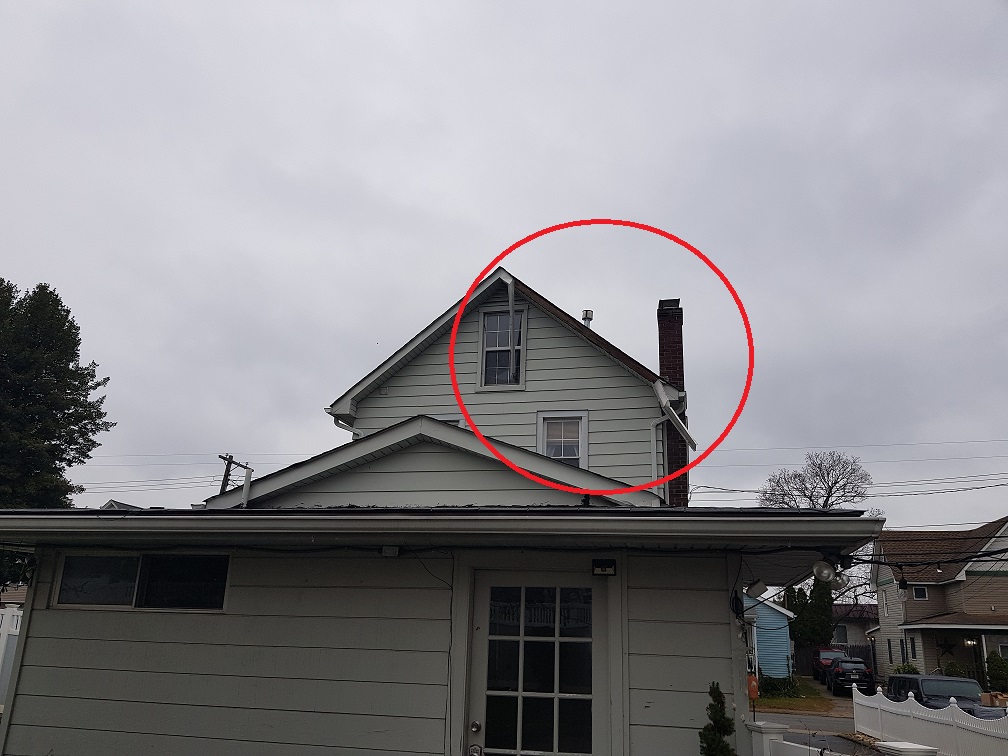
Fascia wind damage, huge storm the night before we went for vacation in the West Coast (Las Vegas, Los Angeles, Grand Canyons). I heard window banging sounds by the broken hanging pieces, but couldn't do anything about it, disturbed my sleep, had to leave early in the morning in neighbor's car to the airport, cannot do anything about it until now.
This is at the attic's level this time, so I cannot reach it like when I fixed similar problem on the first floor, by mere hammer and nails.
Our Geico insurance won't cover it because it's estimate cost is lower than $1.7k. This is estimated to about $500. So I'm calling Chinese contractors in the area I found online to get quotes. The Chinese are estimating around $800 the lowest for new replacement. Some charge up to $1500 or $1500 just for labor and many thinks I'm too remote for them.
Interestingly, after searching online, I came across this:
Martin Luther: Pro-Christmas
Zwingli: Anti-Christmas
Clavin: Neither for nor against
According to the article, it's all about the difference between normative vs. regulative principles. Normative: It's okay if Bible did not mention (or forbid); regulative: It's not okay if the Bible did not mention.
This idea that we will forget our sins in heaven came up during the Sunday school today and I wasn't sure if this was something the American fundamentalist church held in common so I kept quiet so that I could look it up. Knowing that there's something wrong with that statement, just that I couldn't pin point what was wrong with it at the time.
After research, The PuritanBoard once again was helpful. John Calvin's too, on Isaiah 65:16-17.
I don't know why they would think that, as if being irresponsible is okay. No, we will remember our sins. What God meant was that we will not remember our sorrows, or the trouble of the past. Our eternal great joy in Heaven shall blot out the guilt, all negativity of our sins. The forgetfulness is the kind that by comparison it's like the Sun with its great light depriving the stars of their brightness, as Calvin puts it. Our memories of sins are not erased as if they were none existence to us. That is a kind of irresponsible thinking, and thus sinful.
Some from the PuritanBoard made useful comment on this:
If we praise Christ, the Lamb slain, how would we forget that slaying?
God has forgiven us completely and remembers not our debt. Meaning He does not call back the debt. Not that He has a blank in His memory about this.
We can all probably agree that procrastination isn’t wise. Some of us like to believe we work better under pressure. But pressure adds unnecessary stress. While most of us procrastinate from time to time, we often chalk it up to poor planning. When you understand what’s going on in your brain, though, a failure to plan isn’t the root cause.
“Procrastination is an emotion-focused coping strategy,” says Tim Pychyl, associate professor of psychology at Carleton University in Ottawa, and author of Solving the Procrastination Puzzle: a concise guide to strategies for change. “It’s not a time management problem.”
THE BRAIN OF A PROCRASTINATOR
Pychyl says researchers in Germany compared the brains of procrastinators to non-procrastinators using functional MRI. It found that the brains of procrastinators have a larger amygdala, which is part of the limbic system known for fight or flight.
“What’s happening is what we call the ‘amygdala hijack,'” says Pychyl. “The procrastinators are reacting emotionally, and the emotion-focused coping response is to escape. It’s saying, ‘I don’t want these negative emotions I’ll experience during the task,’ and so it avoids the task.”
Another important brain reaction is how it perceives the future. Research done by UCLA social psychologist Hal Hershfield found that the brain views our future self in the same way it views another person.
“[Hershfield] used a functional MRI to look at the brains of people when they were thinking of their present self, their future self, or the other,” says Pychyl. “When we think of future self, the same parts of the brain light up as when we think about the other.”
It’s also human nature to seek pleasure. “We want to feel good now,” says Pychyl. “It’s hedonistic over eudaimonic, which is the happiness we feel when we achieve meaningful goals.”
Putting it all together, when we face a task that presents boredom, frustration, or fear, the limbic system lights up, and the amygdala hijack overrides the prefrontal cortex, which is the home of executive function that includes things like impulse control, planning, and organization.
“All of a sudden, we’ve got all this input from the amygdala and we’re not able to recruit those higher order processes,” says Pychyl. “Even when we do, we think about our future self as a stranger. We’ll mistreat that stranger, and think, ‘I don’t want to do it; that person will.’ All those things come together to drive procrastination.”
Some of us are more prone to procrastination than others. Pychyl says this group often has high traits of neuroticism, such as worry, and depression, and self-consciousness. They have over-active, dominating amygdala.
People who are better at planning use another area of their brain. “You’re really talking about someone who’s high in executive functioning,” says Pychyl. “Instead of so much limbic system activity, they’re getting more prefrontal cortex activity, which reflects with planning and impulse control. Any down regulation of the prefrontal cortex, or executive function, leads to problems with following through on things.”
HOW TO GET CONTROL
If this sounds like you, you may think there’s no hope. Fortunately, there are things you can do. The key to getting control over procrastination is emotion regulation, and one method is practicing mindfulness.
Research out of the University of Pittsburgh found that people can learn to control their emotions through mindfulness. Participants practiced using nonjudgmental awareness over the course of eight weeks. The study found that their amygdala shrunk and the connections to the prefrontal cortex changed.
“When you’re freaking out over a task you need to do, your body and your mind are responding to your physiological arousal,” says Pychyl. “So, first and foremost, you have to stop that pattern of down regulation that it feeds off of.”
Pychyl suggests using breathing and muscle relaxation exercises. Then practice nonjudgmental awareness of the emotion. “Become aware,” he says. “Acknowledge your feelings. For example, you could say, ‘I’m really anxious about this report.’ And then look for the reasons for those emotions. Maybe you don’t want to disappoint. That makes sense. Your emotions are trying to teach you something. But you don’t need to freak out. My favorite saying is, ‘I can have anxiety. I don’t need to be my anxiety.'”
Once you are find a way to get control over your emotions, it’s time to move forward. Procrastination, whether it stems from fear or boredom, is resolved with action. It’s getting yourself to do something you don’t feel like doing. Pychyl suggests propelling yourself forward by breaking down a large goal or task into individual steps.
“What’s the next action you would take if you were going to start?” he asks. “Keep it as small as possible. Then you realize, ‘Well, I could do that action.’ Research has shown us that when you make progress, even a little bit on a goal, it fuels your wellbeing. Even if you just take the tiniest of steps, you’ll help yourself get started and then you’re on your way.”
Mindfulness + action: the one-two punch that can cure procrastination.
I should make a youtube video on this once I understood it. Need to boost my Youtube subscriber number for $. I noticed in Nov/Dec the Sunset time reverses sooner than the Sunrise time. Here's the answer.
Source: Steve Ford: If the Sun were to culminate every day at 12 you would be correct to assume that the times for sunrise and sunset should be symmetrical around noon. However, since the Earth is not moving around the Sun in a perfect circle the angular velocity over the sky as seen from a fixed observer on Earth varies through the year giving rise to what is called Equation of Time, meaning that the sun will not culminate at the same time of day through the year (our clock is based on what is called Mean Solar time which fits the average yearly angular speed of the Sun). During fall and early winter the sun will, due to equation of time, culminate later for each day totaling a difference of around 30 minutes from fall to early winter. In this period, the rate of increase in time for culmination almost cancels the rate of decrease in time for sunset, whereas it almost doubles the rate of increase in time for sunrise.
Source: Filip Larsen: If the Sun were to culminate every day at 12 you would be correct to assume that the times for sunrise and sunset should be symmetrical around noon. However, since the Earth is not moving around the Sun in a perfect circle the angular velocity over the sky as seen from a fixed observer on Earth varies through the year giving rise to what is called Equation of Time, meaning that the sun will not culminate at the same time of day through the year (our clock is based on what is called Mean Solar time which fits the average yearly angular speed of the Sun). During fall and early winter the sun will, due to equation of time, culminate later for each day totaling a difference of around 30 minutes from fall to early winter. In this period, the rate of increase in time for culmination almost cancels the rate of decrease in time for sunset, whereas it almost doubles the rate of increase in time for sunrise.
Why English Bibles say Jesus hung on a tree? Someone at church brought up this question and I looked it up. It has to do with the English word "tree". The Etymology of tree means wood, or wooden structure, in Old/Middle English. The archaic meaning also refers to gallows. And in Greek, the words used for Jesus' hanging tree is ξύλον xulon. The Greek word used for the living tree is δένδρον dendron. ξύλον means wood, the Chinese translation is correct. Modern English confuses people here. Greek word for cross is also different: σταυρός stauros.
I need to look into the validity of some claims. The conservatives maintained only the positive side of the history, that the Indians (Native Americans) and the English pilgrims were friends and Thanksgiving day is to remember that. While the opponents recounted the wars between the two.
Particularly, between the English settlers (King Philip's War) and the Wampanoag people.
On the conservative side, we have authors like Melanie Kirkpatrick. Who has written books about this. On the other side, we have David Silverman, who called all this festive joy a myth.
I'll try to keep an alphabetical order of these, based on phonetics. Some of these terms are well known by either the English speakers or Chinese speakers but new to me.
Abomination of Desolation (那行毁坏可憎的) (it seems that American Christians generally know this phrase): Described in Daniel, mentioned by Jesus in Matthew 24:15-16. Prophesying that the Greek King Antiochus IV Epiphanes in 2 B.C. offered pagan sacrifices in Jewish temple. Also alluded to the destruction of the temple in 70AD by the Romans in Luke 21:20-21, and also referred to Jesus' second coming in Mark 13:14.